A Vigil, a Fire, a Question
The air smelled of smoke and fear. A somber crowd gathered on a German street in Solingen, staring at the charred remains of a family home. In May 1993, neo-Nazi arsonists set this house ablaze, killing five members of the Genc family – two little girls, their aunt, and two other relatives – simply because they were Turkish-German. The tragedy shocked the nation. Yet, decades later, Mevlüde Genc – the family’s matriarch who lost two daughters in the fire – stood at the memorial urging “Never hate, always be good”, even as she mourned. Her plea echoes a question that still haunts Europe: How is it that in a modern, multicultural Europe, people like her family fell victim to such hatred, and why do so many Turkish Europeans continue to feel like outsiders in the only homes they’ve ever known?
What “Systemic” Looks Like in Daily Life
It’s a question that leads straight into the uneasy heart of Europe’s problem with systemic racism. And yes, systemic is the key word here – we’re not just talking about a few skinheads hurling slurs on a bus. This is about the quieter, everyday biases stitched into the fabric of institutions and society. Think of it as a persistent background hum of prejudice that many minorities hear all too well, even when overt racism isn’t slapping them in the face. If you’re a curious non-expert, imagine chatting with a social scientist over coffee about why your Turkish friend born and raised in Europe still gets asked where she’s “really” from. Pull up a chair, and let’s dive in – with a pinch of wit and a dose of hard facts.
Work, Names, and the CV Filter
Picture a bright young professional of Turkish heritage in Germany sending out CVs to potential employers. She has the degrees, the fluent German, the polished manners. But she also has a name like Ayşe Yılmaz. Suddenly, it’s as if she’s equipped her résumé with an invisibility cloak. Field experiments have repeatedly shown that job candidates with Turkish names get significantly fewer callbacks than equally qualified candidates with majority-sounding names. In one rigorous study, researchers sent out paired applications in Germany and the Netherlands, holding everything constant except ethnicity. The result? On average, candidates of Turkish origin were 11 percentage points less likely to receive a positive response than native candidates. In Germany, having a Turkish name led to about a 5% lower callback rate, and in the Netherlands it was a whopping 15% lower. In other words, “Merhaba, I’m Mehmet” on a résumé might as well read “Warning: Foreign” to some employers’ eyes (Thijssen et al., 2021)[1].
These numbers aren’t just statistics – they reflect thousands of real people’s everyday grind of sending applications into the void. Over a casual latte, our hypothetical scientist might quip with subtle sarcasm: “Who knew a name could have such magical powers to shrink job opportunities? If only Hogwarts offered a course in CV name-changing spells.” The humor is wry, but the reality is painful. Generations of European Turks – many of them third or fourth generation citizens – still face barriers in employment due to systemic bias. Discrimination in hiring is one of the clearest examples of systemic racism: it operates quietly, without slurs or headlines, yet it materially hurts people’s livelihoods.
Ambition Meets the Glass Ceiling
And it doesn’t stop at the hiring stage. Even once employed, many Turkish-origin Europeans report hitting a “glass ceiling” or being steered to lower positions. Surveys indicate that significant numbers feel their career prospects are dulled by prejudice. In a comprehensive multi-country survey of the Turkish diaspora in Europe, 17% of respondents said racism and discrimination were the biggest disadvantages to living in their country – making it the second-most cited problem after economic issues. In Austria, nearly 29% of Turks surveyed named racism as the top drawback of life there, and 17% did so in Germany. These aren’t outsiders looking in; these are people who largely feel at home in Europe yet sense a shadow over their opportunities (Center for American Progress, 2021)[2].
Indeed, paradoxically, younger Turkish-Europeans – those most integrated, native-born, native-speaking – often perceive discrimination more acutely than their elders. Why? Perhaps precisely because they feel entitled to equal treatment; they have no memory of emigrating from elsewhere. When subtle biases hit – the landlord who suddenly finds the apartment “already taken” when he hears your last name, or the teacher who discourages you from ambitious academic tracks – younger folks call it out, whereas an older generation might have shrugged it off as “normal.” As one report noted, older Turkish immigrants often had low expectations of equal treatment and thus reported less discrimination, whereas the younger generation, being “more at home,” is less tolerant of bias. In plainer terms: Grandpa, who arrived as a guest worker in the 1970s, might say “Of course we Turks had it tough, that’s just how it was.” His European-born granddaughter responds, “Why should it be that way?”
Beyond Turks: Europe’s Wider Pattern
Now, let’s broaden the view. Many of the challenges Turkish-Europeans face overlap with those of other ethnic or religious minorities across the continent. Europe’s Muslims – a diverse group in which Turks form a major subset in countries like Germany, Austria, and the Netherlands – report routine discrimination in daily life. According to a 2022 EU-wide survey, 47% of Muslims said they faced racial or ethnic discrimination in the past five years – up sharply from 39% in 2016 (European Union Agency for Fundamental Rights [FRA], 2024)[3]. In fact, Austria and Germany recorded the highest rates, with about 7 in 10 Muslims in Austria and two-thirds in Germany experiencing recent discrimination. These are staggering figures that suggest a systemic issue, not just isolated incidents. It’s not just about name bias in hiring, either. The FRA study found discrimination everywhere: 39% of Muslims felt discriminated against when job-hunting, 35% at work, 35% in housing (imagine being blocked from renting a flat because your family’s Turkish or Moroccan), and significant levels even in schools and healthcare. Nearly one in three reported being harassed with racist insults or intimidation in that five-year span.
For Muslim women, especially those who wear headscarves, the experience can be even tougher. A young woman in Europe donning a hijab might feel she’s carrying an extra weight of stereotypes – sadly, the data backs her up. Muslim women who wear religious clothing were far more likely to face harassment and job discrimination; almost half reported bias when job-seeking, versus about one-third of those not visibly Muslim. So if you ever wondered why your Turkish colleague named Ayşe (who happens to cover her hair) seems twice as qualified as the guy next to her – well, she might have had to be, just to get through the door.
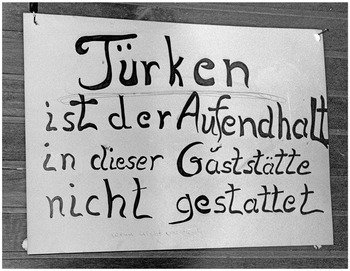
These patterns point to systemic racism – meaning prejudices that are baked into the systems and social structures, not just individual bad apples. Europe, of course, prides itself on equality and human rights; many EU countries have robust anti-discrimination laws on paper. But as any Turkish immigrant family can tell you over tea, having laws is one thing, living the reality is another. Discrimination often lurks in the grey areas: the job interview that mysteriously ends early, the police officer who stops you for “random” ID checks five times a year, the subtle signals that you’re not quite welcome in certain neighborhoods or social circles.
When Institutions Fail: The NSU Case
Even the police and security services in Europe have had their blind spots – sometimes deadly ones. Germany provides a chilling case study with the saga of the National Socialist Underground (NSU), a neo-Nazi terror cell that murdered 10 people (8 of them of Turkish origin) between 2000 and 2007. For years, authorities failed to recognize these as racist hate crimes. Instead, investigators infamously treated the victims’ families as suspects, chasing theories of Turkish mafia feuds while the real killers roamed free. This misdirection wasn’t random; it reflected structural biases – an assumption that if a Turkish small-business owner was gunned down, “must’ve been some criminal deal gone wrong.” German police even code-named the case “Bosphorus” and the tabloids crudely dubbed the murders the “Doner Killings,” implicitly blaming the Turkish community. Only in 2011, when the neo-Nazi culprits were exposed by chance, did the country reckon with how institutional racism had badly derailed the investigation. A parliamentary inquiry later found “structural prejudices” in law enforcement contributed to these failures. In plainer words, if the victims hadn’t been immigrants, the police might have connected the dots much sooner. One German-Turkish leader bluntly called it “everyday racism” in the institutions.
Roma, Black Europeans, and the Telltale Rhymes
That institutional bias is something many minorities, not only Turks, know too well. Roma communities, for instance, often face blatant segregation and profiling in Europe. From France to Hungary, Roma children have been shunted into substandard schools or separate classes, and Roma families evicted from camps in what rights groups call a pattern of anti-Gypsyism (Human Rights Watch, 2025)[7]. People of African descent in Europe report disproportionate police stops and even brutality. In a 2018 EU survey, half of Black respondents said they experienced harassment or worse in the previous five years. Across the board, whether you’re Turkish, Arab, Black, South Asian, or Roma, being “racialised” (as academics put it) often means dealing with barriers that white majority folks simply don’t encounter. This could be a Romanian Roma woman turned away from a job because of her surname, or a Nigerian-French man who has to budget an extra 20 minutes for his commute because police will likely “randomly” stop him – again. These are different threads of Europe’s tapestry of systemic racism. The patterns aren’t identical, but they rhyme.
Islamophobia and the Turkish Experience
Still, the Turkish experience in Europe has its own unique wrinkles, often tied up with religion (Islamophobia), language, and geopolitics. Many European Turks are Muslim and visibly so – whether through name, appearance, or attending mosque – which overlaps with Europe’s broader struggle with Islamophobia. Hate crimes tell part of this story. In Germany, for example, authorities recorded 813 hate crimes against Muslims in a single year (2018), including verbal abuse, threats, physical assaults, and vandalism of over 100 mosques. France and Austria have also seen spikes in anti-Muslim incidents. Far-right political rhetoric has mainstreamed some anti-Turkish and anti-Muslim sentiment, casting these communities as the perennial “Other” threatening European values. It’s a bit rich, considering Turks have been part of Europe’s fabric for generations – but demagogues never let nuance spoil a good soundbite.
Greece: Language, Identity, and Law
Sometimes, discrimination comes directly from state policies. Consider Greece, where a historic Turkish minority has lived in Western Thrace for centuries. They’re Greek citizens – their ancestors didn’t immigrate; the borders moved around them after the Ottoman era. Yet, they endure a systematic campaign of cultural erasure. A 2025 fact-finding mission by the European Language Equality Network (ELEN) found “incredibly high levels of systemic, normalized discrimination” against the Turkish minority in Greece. For instance, Greek authorities have consistently undermined Turkish-language education. One report described how a bilingual Turkish-Greek middle school was left in disrepair – the government simply refused to fix the crumbling building, apparently hoping parents would give up and send their kids to Greek-only schools instead. Attempts by the community to open private Turkish-language nursery schools have been blocked; officials insist all preschoolers must attend Greek-only kindergartens. The result? An entire community pushed to abandon its mother tongue. A century ago, the Treaty of Lausanne (1923) guaranteed these people education and rights in their language. Today, one observer dryly noted that the Turkish minority’s situation in Greece is “one of those rare occasions where the situation for the national minority was better 100 years ago”. Ouch. It seems some ghosts of early-20th-century nationalism still linger in the Greek bureaucracy. One could add with a hint of sarcasm: Apparently, fixing a school roof might pose a dire threat to national security if the kids under it speak Turkish.
Beyond education, Greek Turks face restrictions on identifying themselves publicly as “Turkish.” Their associations have even been banned from using the word “Turkish” in their names – an absurd linguistic acrobatics enforced by Greek courts. This kind of state-sanctioned discrimination shows that systemic racism isn’t only a social bias; it can be written into policy and law. And it puts the lie to the notion that Western Europe has a monopoly on liberal values – minorities in southeastern Europe, like Turks in Greece or Roma in many countries, often find their rights curtailed in ways that would spark outrage if it happened further west.
Kurds, Terror Listings, and the Double Standard Debate
However, Western Europe has its own paradoxes and double standards, especially when it comes to Turks and Kurds. Now here’s a twisty tale of geopolitics and justice. Many European countries have sizable communities of ethnic Kurds, some of whom fled persecution in Turkey. Europe generally views the Kurdish people sympathetically, seeing them as an oppressed minority from Turkey or heroic fighters against ISIS. Turkey, on the other hand, considers certain Kurdish groups – notably the PKK (Kurdistan Workers’ Party) – as terrorists. The PKK did wage a deadly insurgency in Turkey for decades, complete with bombings and assassinations, including attacks not just in Turkey but on Turkish targets in Europe (for instance, PKK operatives firebombed Turkish diplomatic offices in six West European countries in 1993). So, how does this relate to systemic racism?
Well, ask a Turk in Europe about fairness, and you might hear something like this: “If a Turkish person so much as throws a punch in Europe, they’ll be labeled a violent thug, but known supporters of a group that killed civilians in Turkey walk free.” Indeed, European governments have often given Kurdish militants political asylum or refused to extradite them to Turkey – citing human rights concerns – even when those individuals are wanted for violent crimes. A security source revealed that since 1984, Turkey filed 657 extradition requests for suspected PKK members from EU countries; virtually all were rejected. At least 227 of these suspects were instead granted refugee status in Europe on the grounds that they’d face persecution in Turkey. Germany, for example, long refused extraditions by pointing to Turkey’s past use of the death penalty and potential life sentences. To Turkish officials, this feels like a glaring double standard – as if Europe tacitly says “Your terrorists are our freedom fighters.” In the words of one exasperated Turkish analyst, “Europe has long protected PKK members” and views them “more favorably in the West” because they opposed ISIS. Meanwhile, European countries have not hesitated to crack down on Turkish ultra-nationalist groups (like the Turkish “Grey Wolves,” which France outright banned in 2020 for their militancy against Kurds and Armenians). So from a Turkish perspective, it can look like their community gets policed as potential troublemakers, while anti-Turkish extremists get a pass. This perception feeds a sense among Turks that some European authorities simply don’t value Turkish lives or security as much as others’. Is it racism, geopolitics, or a bit of both? Over coffee, our scientist friend might shrug and say, “It’s complicated,” before wryly adding, “but try explaining that nuance to a Turkish shopkeeper in Berlin who sees pro-PKK graffiti on his storefront and feels the police shrug.”
Free Speech, Security, and Trust
To be fair, European governments argue they’re upholding principles of free expression and the rule of law – not intentionally slighting Turkish people. But cases like Sweden’s recent saga with NATO show how sensitive this gets. In early 2023, a small group of Kurdish protesters in Stockholm hung an effigy of Turkey’s president from a lamppost, to Turkey’s outrage. Swedish authorities condemned the stunt but didn’t jail the perpetrators, citing free speech protections (AP News, 2023). To many Turks, it was another slap in the face – a feeling that Europe allows brazen disrespect and even incitement against Turks under the banner of rights. It’s a messy intersection of values: Europe’s commitment to dissent versus Turkey’s demand for respect and security. Stuck in between are ordinary Turks in Europe, who may end up mistrusting the very countries they live in because they perceive those states as indulgent toward anti-Turkish actors.
Progress, Belonging, and the Work Ahead
After this long tour, where do we stand? Are things uniformly dire? Not exactly. Many Turkish-Europeans are succeeding, integrating, and feel happy in their countries. In the Turkish diaspora survey, an overwhelming majority said they were “happy living in [their] current country” (despite also often saying they’d be even happier if Europe treated Turkey better). Most feel at home in Europe and do not experience daily hostility. There’s progress to celebrate: second-generation Turks becoming doctors, lawmakers, academics, even mayors (the election of Sadiq Khan, a Muslim of Pakistani descent, as London’s mayor was noted with pride by many Muslim immigrants, including Turks, across Europe). Anti-discrimination laws and awareness are better now than decades ago. And each new generation seems more determined than the last to claim their equal place in society.
Yet, systemic racism remains the elephant in the room – large, grey, and stubbornly standing on the rug of European values. It’s evident in statistics and in stories told in cafes and community centers from Berlin to Brussels. The challenge is that systemic bias doesn’t always wear a swastika or scream xenophobic slogans. It often smiles and says, “We’re not hiring right now,” or, “It’s just a coincidence that we raided only the immigrant neighborhoods.” It lives in ingrained stereotypes and institutional inertia. Tackling it requires systemic solutions: better enforcement of anti-bias laws, more diversity in hiring and in police forces, zero tolerance for hate crimes, and frankly, a bit of soul-searching among Europe’s majority about their own implicit biases.
A Continental Reckoning
Europe is at least acknowledging the problem in ways it once didn’t. In March 2025, a coalition of 47 civil society organizations – from human rights groups to minority associations – issued a joint call to “confront systemic racism” across the EU (Human Rights Watch, 2025)[7]. They pointed out that despite strong laws, racism remains “pervasive throughout Europe”, affecting Roma, Black people, people of Asian and Arab descent, Muslims and Jews – pretty much anyone who doesn’t fit the old homogenous mold. The statement warned that letting entire communities be scapegoated or marginalized not only harms those groups, but also “drags the continent further away from a future of justice and equality”. In other words, systemic racism is a poison that threatens Europe’s own cherished ideals.
Callback: Smoke, Fear, and the Choice to Be Good
As our coffee chat winds down, let’s circle back to where we began – that smoky night in Solingen and the words of Mevlüde Genc. After losing so much to senseless hatred, this bereaved mother became an activist for tolerance, preaching unity between Turks and Germans. “Never hate,” she said, “always be good.” It’s a simple, profound message – one that Europe, in all its complexity, would do well to remember. Because the fight against systemic racism isn’t just about policies or surveys; at its core, it’s about human hearts. It’s about choosing solidarity over suspicion, empathy over prejudice. The scene of neighbors – of all backgrounds – standing together at a memorial vigil under the evening sky, vowing “never again,” is a powerful one. Europe’s future will be written in moments like that. The hope is that those moments of unity and understanding become the norm, not the exception. And when they do, perhaps smoke and fear will finally give way to clear skies – and the only thing in the air will be the rich aroma of coffee shared among friends, equal and unafraid.
References
References (APA style)
- Thijssen, L., Lancee, B., Veit, S., & Yemane, R. (2021). Discrimination against Turkish minorities in Germany and the Netherlands: Field experimental evidence on the effect of diagnostic information on labour market outcomes. Journal of Ethnic and Migration Studies, 47(6), 1222–1239. https://doi.org/10.1080/1369183X.2019.1622793
- Center for American Progress. (2021). The Turkish Diaspora in Europe: Education, Integration, and Equality. [Report]. Washington, DC: CAP. (Data on perceived discrimination and integration drawn from survey findings)
- European Union Agency for Fundamental Rights (FRA). (2024, October 24). Muslims in Europe face ever more racism and discrimination [Press release]. Retrieved from https://fra.europa.eu – (Key findings from the 2022 EU-wide survey “Being Muslim in the EU”)
- Zeyrek, M. (2024, May 28). Memory still alive of 1993 German arson attack on Turkish family. Anadolu Agency. Retrieved from https://www.aa.com.tr – (Eyewitness accounts and commemoration of the Solingen attack; includes quotes from survivors)
- Anadolu Agency. (2015, September 1). Europe “rejects” extradition of PKK suspects. Anadolu Agency News (English). Retrieved from https://www.aa.com.tr – (Details on EU states’ refusal to extradite hundreds of wanted PKK members and asylum grants)
- Spiegel International. (2013, August 28). ‘Everyday Racism’: Turkish Community Responds to NSU Report. Der Spiegel. Retrieved from https://www.spiegel.de – (Summary of the Turkish Community in Germany’s report on institutional racism in the NSU investigation; discussion of police bias)
- Human Rights Watch et al. (2025, March 17). EU: Confront Systemic Racism [Joint Civil Society Statement]. Human Rights Watch News. Retrieved from https://www.hrw.org – (Statement by 47 NGOs noting pervasive systemic racism in Europe affecting Roma, African, Asian, Muslim communities, and calling for action)
- European Language Equality Network (ELEN). (2025, May 8). ELEN fact-finding mission verifies systemic discrimination against the Turkish national minority in Greece [Press release]. Retrieved from https://elen.ngo – (Reports of Greek government’s policies undermining Turkish minority education and rights in Western Thrace)
- SETA & Anadolu Agency. (2019, October 2). Turks in Europe face systemic racism: Turkish FM [Policy Report]. SETA/Anadolu Agency. (Foreign Minister Mevlüt Çavuşoğlu’s remarks on rising discrimination and Islamophobia in Western Europe; includes stats on hate crimes)
- Fleming, M. (AP News). (2023, January 12). Sweden: Erdogan effigy ‘act of sabotage’ against NATO bid. Associated Press. Retrieved from https://apnews.com – (Covers the incident of a Kurdish group in Sweden hanging an effigy of Turkey’s president during a protest, and official responses).