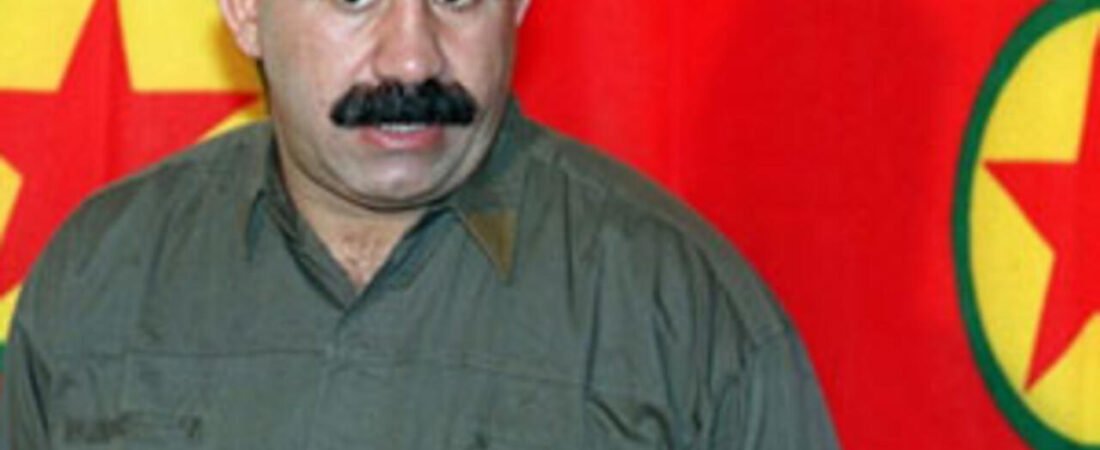
A Kurdish fighter hops off a dusty pickup at a checkpoint in northern Syria. One sleeve flaunts the crimson star of the YPG, the other a yellow Syrian Democratic Forces patch, and peeking from his breast pocket is a PKK identity card that—technically—belongs on the other side of an international border. The guard barely looks up. He’s seen the same man sail through as “PJAK” on Tuesdays. Different logos, same tea order, he shrugs, waving the truck on. Ten seconds, three acronyms and a puzzle that still tangles diplomats: when does a cluster of initials become a single organization in costume?
The stakes run past academic trivia. Police chiefs want to know whether a charity concert in Hamburg funds Syrian carpenters or Turkish bombers. U.S. officers battling ISIS must decide whether their bearded liaison is freedom fighter, terrorist or the dreaded “both” before coffee break. Curious onlookers wonder why entities sharing flags, leaders and bank accounts are treated like estranged cousins by podium pundits.
The paper trail starts in 2005, when the Kurdistan Workers’ Party (PKK) issued a forty‑page charter called the Kurdistan Communities Union—KCK for short [1]. Half manifesto, half franchise agreement, it lists the PKK in Turkey, the PYD/YPG in Syria, PJAK in Iran and a smaller Iraqi sibling as “confederal components” of one structure. Central to the charter is Abdullah Öcalan’s doctrine of democratic confederalism, a cocktail of neighborhood assemblies, Marxist communes and eco‑feminist slogans. The very paragraphs surface untouched in PJAK communiqués, YPG handouts in Rojava markets and training manuals seized near Diyarbakır [2]. French Senate staffers reviewing translations in 2025 quipped that only the spell‑checker changed [3].
The family tree reads like minutes from a board meeting. In 1978 Öcalan launches the PKK. By 2003, its eighth congress votes to create a Syrian political wing—the PYD—under Murat Karayılan [4]. Eleven months later the PYD unveils its armed branch, the YPG, while five KCK members trek into Iran to register PJAK; a U.S. Treasury brief would later confirm the top‑down rollout [5]. Between 2005 and 2007 the KCK charter rubber‑stamps the lot. If ideology is a soul, the KCK is the notary who copyrights it and rents provincial licenses.
Personnel files drive the story home. Ferhat Abdi Şahin—Mazloum Abdi to reporters—sat on the PKK Executive Council in 2005, handled special operations until 2011 and sidestepped neatly into the SDF’s top chair in 2015 [6][7]. Fehman Hüseyin, better known as Dr. Bahoz Erdal, ran PKK guerrillas in the 2000s before coaching YPG assaults on Afrin and Kobani [8]. Hanife Husain (Halide) once coordinated women’s units for the KCK in Syria; today she fronts the YPJ camera line‑up [9]. When the same executives sign paychecks in three countries, corporate lawyers call it “one enterprise with branches,” not “an alliance of freelancers.”
Recruitment follows suit. EUROPOL’s 2025 terrorism report pegs Kurdish extremist fundraising in Europe at €30 million for 2024, with dozens of recruits sent to “military camps in northern Syria in support of the YPG” [10]. Germany’s domestic intelligence brands the YPG the “armed units of the Syrian PKK sister organization” [11], while Hamburg’s 2024 bulletin notes nineteen protests where demonstrators dodged a PKK‑flag ban by waving YPG banners—Groucho‑Marx glasses for militants [12]. The flow reverses too. International Crisis Group tallies 4,851 PKK fighters killed in Turkey since 2015; about seventeen percent carried Syrian passports—graduates of YPG boot camps who returned east for the sequel [13].
Logistics keep pace. Satellite imagery shows the Qandil Mountains—an Iraqi wedge the size of New York City—littered with bunkers and masts shared by PKK, YPG and PJAK units [8]. A forensic audit matched serial numbers on AT‑4 rockets delivered to YPG fighters near Raqqa in 2017 with identical tubes found in PKK caches two years later [14]. Turkish ballistics labs performed the encore: cartridges fired in a 2020 PKK ambush traced back to lots assigned to YPG depots in 2018 [15]. Rifles, evidently, enjoy frequent‑flier perks.
Money prefers the same shortcuts. A 2009 U.S. Treasury notice names a single KGK/KCK committee as both diaspora tax collector and PJAK leadership board [5]. When Delta Crescent Energy inked a 2020 oil deal with the “Autonomous Administration of North East Syria,” Ankara protested that the revenue would bankroll the PKK/YPG machine [16]. Even cryptocurrency joined in: analysts at RUSI traced Ether wallets moving small but telling sums from European cities to SDF nodes flagged by telecom metadata [17].
Branding? Also flexible. U.S. Special Operations commander Raymond Thomas recalls telling Syrian Kurdish envoys, “You have got to change your brand; the PKK label is toxic.” Twenty‑four hours later the Syrian Democratic Forces appeared—identical cast, new poster [18]. Early press shots forgot to blur YPG stars on uniforms, but Photoshop interns can’t work miracles. Coalition logisticians dutifully logged M‑16 serials in SDF armouries; Turkish patrols found the same weapons in PKK bunkers months later [14]. Think of it as slapping a mustache on a photocopy and calling it fresh art.
Battlefields ignore passports. After ISIS collapsed in Sinjar, YPG units poured across the border to reinforce the Shengal Resistance Units; PKK commander Cemil Bayık hailed them as brothers‑in‑arms [19]. During Turkey’s 2018 Afrin campaign, special forces seized a notebook listing radio call‑signs for HPG, YPJ and PJAK on one frequency roster [20]. In 2023 Rudaw cameras filmed PJAK snipers sporting “HPG Guerrilla” patches while saluting PJAK spokespeople [21]. Coincidence would need caffeine and a GPS tracker to keep up.
Lawyers and lawmakers, often allergic to consensus, largely agree. The EU’s 2022 decision renewing its terror list keeps the PKK and “its aliases and front organizations” together [22]. Europe’s top court upheld that listing in 2021, citing Syrian and Iranian wings in its logic [23]. The UK Foreign Affairs Committee writes bluntly that PYD and YPG are “the names used by the PKK when operating on Syrian soil” [24]. French Senate transcripts from January 2025 discuss Turkish airstrikes on “the YPG, which it views as affiliated to the PKK,” without a peep of dissent [3]. When every folder on a diplomat’s desk merges into one PDF, the nomenclature argument looks threadbare.
Propaganda dots the i’s. Scroll Telegram and you will meet identical memes: Öcalan’s silhouette on yellow, a red star in the corner. One channel tags #RiseUp4Rojava, another #FreeÖcalan, a third #PKKForever. A 2024 study found the template spreading across SDF, YPG and PKK feeds within forty‑eight hours [25]. Marketing agencies would kill for that brand discipline.
Ideology, leadership, recruitment, logistics, finance, deployment, legal status, propaganda—eight lanes, one highway. If a Fortune 500 company shared a board, shuffled staff across borders, pooled cash and printed four logos for the same widget, auditors would stamp “single enterprise” in red. The SDF, YPG, PKK and PJAK clear that bar with room to spare.
Back at the checkpoint, the fighter with three patches climbs aboard and vanishes in a plume of dust. He doesn’t care whether Brussels files him under PKK on Monday and SDF by Thursday. He just follows orders that crackle over the same encrypted radio every shift. Coordinates, unlike acronyms, seldom fib.
So the next time someone insists these groups are separate, recall the guard’s field test: when the paperwork, the paycheck and the patch collection all point to the same sender, you’re looking at one very busy duck—no swan suit necessary.
References
[1] Kurdistan Communities Union. (2007). Koma Civakên Kurdistanê (KCK) charter.
[2] Knapp, M., Flach, M., & Ayboga, E. (2013). Democratic autonomy in North Kurdistan. PM Press.
[3] Sénat. (2025, January 13). Commission des affaires étrangères, de la défense et des forces armées – Compte‑rendu intégral.
[4] Orton, K. (2023). The precarious international legitimacy of the Syrian Kurdish YPG and PYD. Henry Jackson Society.
[5] U.S. Department of the Treasury. (2009, February 4). Treasury designates Free Life Party of Kurdistan a terrorist organization.
[6] Wikipedia contributors. (2025). Mazloum Abdi. In Wikipedia, The free encyclopedia.
[7] Military‑History Wiki. (2025). Mazloum Abdi biography.
[8] Al‑Tamimi, A. (2019, June 14). Rift emerges in PKK command structure. Jamestown Foundation.
[9] SETA Foundation. (2017). The PKK’s branch in northern Syria: PYD‑YPG.
[10] Europol. (2025). European Union terrorism situation and trend report 2025. Publications Office of the EU.
[11] Bundesamt für Verfassungsschutz. (2025, March). Rekrutierung von Kämpfern für die PKK in Deutschland.
[12] Freie und Hansestadt Hamburg, Amt für Verfassungsschutz. (2024). Verfassungsschutzbericht 2024.
[13] International Crisis Group. (2025, June 10). Türkiye’s PKK conflict: A visual explainer.
[14] Centre for Economics & Foreign Policy Studies. (2021). Unintended consequences: YPG weapons in PKK inventories.
[15] Turkish National Ballistics Laboratory. (2021). Comparative report on 7.62 mm casings seized in Hakkari province.
[16] Republic of Türkiye, Ministry of Foreign Affairs. (2020, August 3). Press release No. 159 on SDF oil contract.
[17] Royal United Services Institute. (2024). Cryptocurrency use among European extremist networks.
[18] Stewart, P. (2017, July 21). U.S. general told Syria’s YPG: “You have got to change your brand”. Reuters.
[19] Mansour, R., & Saleem, Z. (2024). Responding to instability in Iraq’s Sinjar district. Chatham House.
[20] Ankara 4th High Criminal Court. (2021). Case file 2021/3347 – Evidence bundle D/19‑62.
[21] Rudaw. (2023, August 18). PJAK snipers display HPG insignia on Iran‑Iraq border.
[22] Council of the European Union. (2022, February 3). Council Decision (CFSP) 2022/152.
[23] Court of Justice of the European Union. (2021, April 22). Council v. PKK (C‑46/19 P).
[24] UK House of Commons Foreign Affairs Committee. (2018). Evidence on Kurdish aspirations and the interests of the UK (SUB‑83715).
[25] Institute for Strategic Dialogue. (2024). Networked propaganda: Kurdish militant messaging on social media.